
By Mo Al-Ebadi
OMAHA, Neb. — Dogs that come into shelters often carry the effects of neglect or abuse, shaping how they react to people and their surroundings.
At the Nebraska Humane Society, Executive Vice President Steven Elonich said those signs can be immediate.
“We’ll have dogs come in showing signs of trauma and neglect… being scared of people, shut down in their kennels, very defensive,” Elonich said.
While those behaviors are visible, they only tell part of the story.
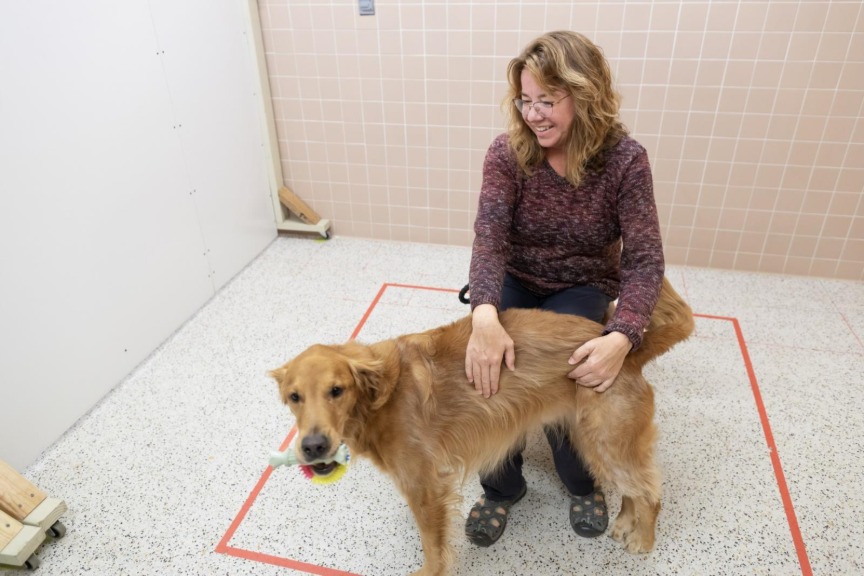
At the University of Nebraska Omaha, student researchers are studying how early experiences shape a dog’s behavior over time. Their work focuses on understanding how trauma affects dogs long after they leave shelters.
Students Maya Bergstrom and Izzy Apel are examining how trauma can appear in behavior.
“Dogs can exhibit some mental health conditions kind of similar to humans,” Apel said.
Researchers are using hair samples to measure cortisol; a hormone linked to stress. By analyzing about 100 strands of hair, they can track stress levels over several months rather than just a single moment.
UNO student researcher Izzy Vargas said that it allows them to better understand long-term stress.
“It’s a biomarker for measuring chronic stress over time,” Vargas said.
Researchers then compare those stress levels with behavior to see how trauma may influence how dogs respond in new environments.

That data could help identify patterns in how dogs respond to trauma, giving shelters and owners more clarity when working with them.
It could also explain why some dogs take longer to adjust, even after being placed in stable homes, and what it takes to give them a better chance at long-term success.
The research team is still looking for participants. Dog owners who have recently adopted a dog can take part in the study by completing a survey and, in some cases, submitting a small hair sample.
The goal is to better understand how trauma affects dogs and provide guidance that can improve their care, training and adoption outcomes.



Leave feedback about this