
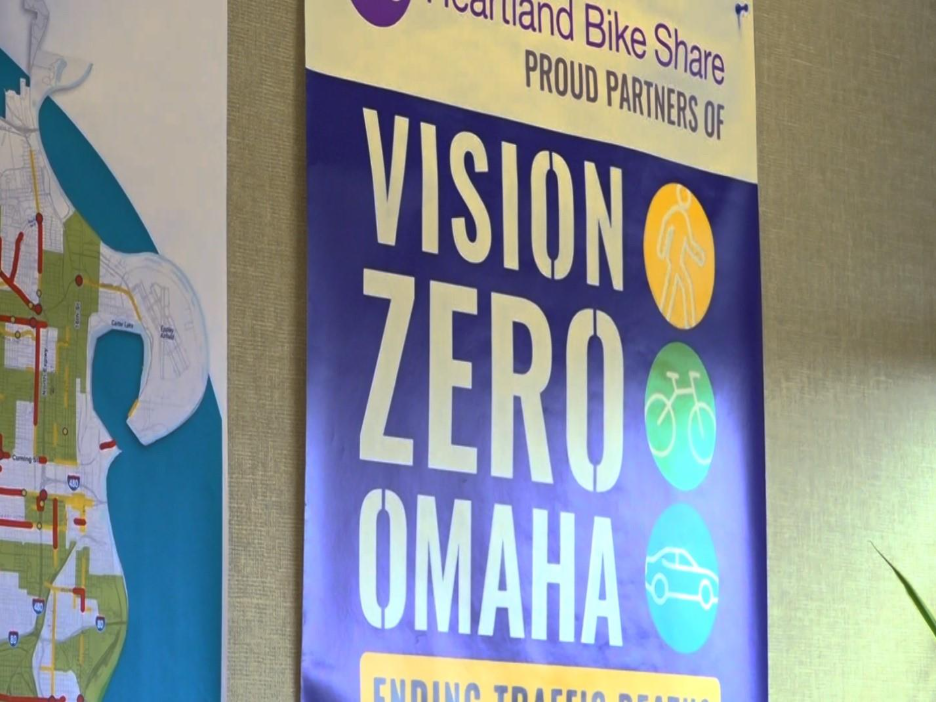
By Katie Gomez OMAHA, Neb. – Omaha is two years into its Vision Zero Action Plan — a citywide initiative that aims to eliminate all traffic-related deaths and serious injuries by 2045.
Mayor Jean Stothert formally committed Omaha to the Vision Zero program, joining more than 40 communities across the United States that have adopted the same goal. The strategy, first developed in Sweden in the 1990s, is built on the idea that no loss of life on the road is acceptable.
“Transportation is one of the biggest elements that contribute to quality of life and economic development,” said Jeff Sobcyzyk, Omaha’s Vision Zero coordinator. “The effort is to build a transportation system that’s forgiving, so when mistakes do happen, they don’t result in life-altering consequences.”
Sobcyzyk said Omaha’s plan focuses on data-driven design changes to make streets safer for all users — drivers, cyclists and pedestrians alike. Those changes include lane reconfigurations, new signage and physical alterations to slow down traffic.
“We’re looking for small opportunities to slow vehicles down and create more awareness for everyone on the road,” Sobcyzyk said. “About 50% of all the fatal and serious injury crashes happen on roughly 8% of our roads, so we know where we can focus our priorities to get the most impact.”
The Vision Zero Action Plan uses what’s known as the Safe Systems Approach, which emphasizes road design and policy solutions — such as Complete Streets — that encourage safer behavior by default.
Matt Selinger, a senior advisor with JEO Consulting Group who has worked on Omaha’s Vision Zero project, said the city’s plan has been highly collaborative across departments and industries.
“In the U.S., there are around 40,000 to 45,000 traffic deaths each year,” Selinger said. “If you amplify that by 10 or 20 times, that’s how many people suffer serious, life-altering injuries. It’s a massive problem.”

Selinger added that the biggest challenge remains human behavior. “The toughest part is the human factor,” he said. “It’s hard to change people’s perspectives and habits.”
Omaha officials say while the 2045 goal is ambitious, the incremental progress being made now — from redesigning intersections to lowering speed limits — is critical for achieving lasting change.
“Our streets should be safe and accessible for everyone,” Sobcyzyk said. “That’s why zero is the only acceptable goal.”


Leave feedback about this