Mo Al-Ebadi
OMAHA, Neb. — Nebraska’s minimum wage reached $15 an hour this year under a voter-approved plan that gradually increased pay from $9 in 2020. Now, a new state law will change how that wage grows moving forward.
Legislative Bill 258, approved in February, sets future minimum wage increases at 1.75% annually beginning in 2027. The law also establishes a $13.50 youth minimum wage for workers ages 14 and 15 and allows a $13.50 training wage for certain workers ages 16 to 19 during their first 90 days of employment.
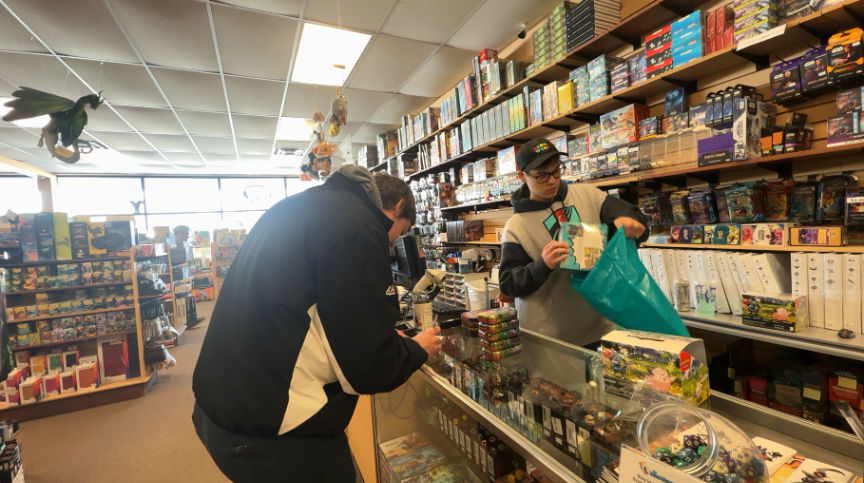
A customer makes a purchase at The Game Shoppe in Omaha as Nebraska’s
For Norman Herrick, CEO and owner of The Game Shoppe in Omaha, the steady rise in wages over the past six years required adjustments across his business.
“So obviously, with the minimum wage increases and stuff, it raises wages across the board,” Herrick said
Herrick said the increases affected more than entry-level pay. As starting wages climbed, he said he also had to raise pay for full-time employees and managers to maintain wage balance within his team.
“You also have to increase the wages that you’re paying your full time staff that have been on, you know, with you for a couple years. You also have to increase the wages that you’re paying your managers, because you need to keep that parity of wages,” he said.
Labor is one of his store’s largest expenses, though not the largest.
“It is our number two; our number one cost is inventory. Our number two is labor,” Herrick said.
Despite higher labor costs, Herrick said he has seen growth in revenue in recent years and believes rising wages have contributed to increased spending among customers.

Board games line the shelves inside The Game Shoppe in Omaha, where owner Norman Herrick says rising minimum wages have required adjustments across his staff and operations.
“As the minimum wage goes up, we see customers that have significantly more disposable income to spend,” he said.
Under LB 258, the minimum wage will continue to increase each January but at a fixed annual rate rather than being tied to inflation. Herrick said it is too early to determine how that change will affect his business.
“As of right now, I don’t actually have any ideas to what, how that is going to actually impact us,” he said. “That doesn’t give us any insight as to, hey, are our sales going to go up by enough to cover this?”
For now, Herrick said his focus remains on maintaining pay equity within his team and adjusting as needed.
The state’s minimum wage will continue to rise under the new law, but at a different pace than in previous years.

Leave feedback about this