
By Denise Valdez-Alvarez
OMAHA, Neb – Pollinator education is increasing through informative events hosted by organizations around the Omaha metro area including Green Omaha Coalition and Nebraska Extension in Douglas and Sarpy counties.
The Master Gardner Volunteer Program at Nebraska Extension in Douglas and Sarpy counties has partnered with the Omaha Public Library to host pollinator planting workshops across library branches. These workshops are free to attend and participants learn to introduce native and pollinator plants into their gardens to serve as a home for pollinators.
The decline of pollinators has been an ongoing issue as urbanization increases. According to an article on pollinator diversity and pollination in urban areas, pollinator diversity is relatively high in urban places compared to most rural and agriculture areas.
Extension associate in horticulture Scott Evans said the focus of these workshops is to inform and inspire people to be part of the pollinator solution.
“Our main goal is just letting people know that they can be part of the solution and they can have fun too because we like gardening, we like the flowers. It’s a win-win situation for all of us,” Evans said.
In addition to workshops, volunteers also manage about 20 teaching gardens across Douglas and Sarpy counties and serve as the backbone of the program.
“They’ve always just been a really nice platform that we can go out and show people like best management practices for pollinator gardens or how to properly garden in the shade, vegetable gardening, so they’ve been a staple of our program,” Evans said.
Efforts to promote pollinator education also extend into local schools.
Bryan High School students in the Urban Agriculture Academy are learning about gardening practices and pollinator habitats through their own pollinator gardens.

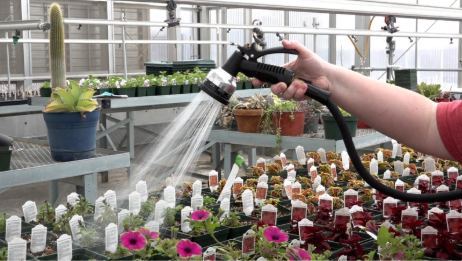
Established in 2012, the academy focuses on bringing agriculture into the city. Students learn and gain hands-on experience in the classroom, a greenhouse and gardens.
From weeding and counting pollinators to harvesting seeds, students participate in the entire gardening process.
Many of the native plants used in the garden are donated by Nebraska Monarchs through its Native Plant Giveaway at Omaha South High School. Students in the academy volunteer at the event and give away extra plants from their spring plant sale.
Pollinators are observed in the garden throughout the seasons, though some students initially are nervous about the presence of bees at the start of the school year, Wilton-Cooper said.
“But we need our pollinators to be able to produce food. They help with pollination, which then helps with fertilization of seeds, so that plants will reproduce, so that we can have our fruits and our veggies and stuff like that,” Wilton-Cooper said.
Pollinators are not the only ones benefiting from the gardens. Some students have applied what they have learned by starting their own gardens.
Wilton-Cooper said students have given her vegetables they grew themselves.
For students who do not start their own gardens, skills such as teamwork and collaboration are developed through designing and planting the landscape bed.
“It’s been really cool to see them just really find a love for plants,” Wilton-Cooper said.


Leave feedback about this